






Dear friends!
In connection with the "Year of Unity of the Peoples of Russia" project, we would like to introduce you to our Mari people.
The Mari people are a Finno-Ugric people with an ancient history and a unique culture. According to the 2010 census, about 550,000 Mari people live in Russia, and almost half of them are in the Republic of Mari El. The people are divided into three ethnic groups: mountain, meadow and eastern Mari — each has its own traditions, language and national costume.
The ancestors of the Mari people appeared in the Volga-Vyatka region as early as the beginning of the first millennium A.D. Their lands spread on both sides of the Volga and passed through different eras: from the Golden Horde to the Kazan Khanate, and in the XVI century became part of the Russian state.
Despite the influence of Orthodoxy, Islam, Russian culture, and writing, the Mari people retained their ancient faith. Paganism has not disappeared here, which is why the Mari people are often called the last pagans of Europe.
There are about 40 gods in the Mari pantheon. The supreme creator god is "Osh Poro Kugu Yumo" — the Big White God. There are also deities of the elements: water, forest, fire — special rituals are dedicated to each of them.
The Mari people do not have temples in the usual sense. Prayers and sacrifices are held in sacred groves — "kōsoto". The rituals are conducted by a priest — "kart" — an intermediary between people and the gods.
Mari culture is a living connection with nature, ancient beliefs and ancestors.
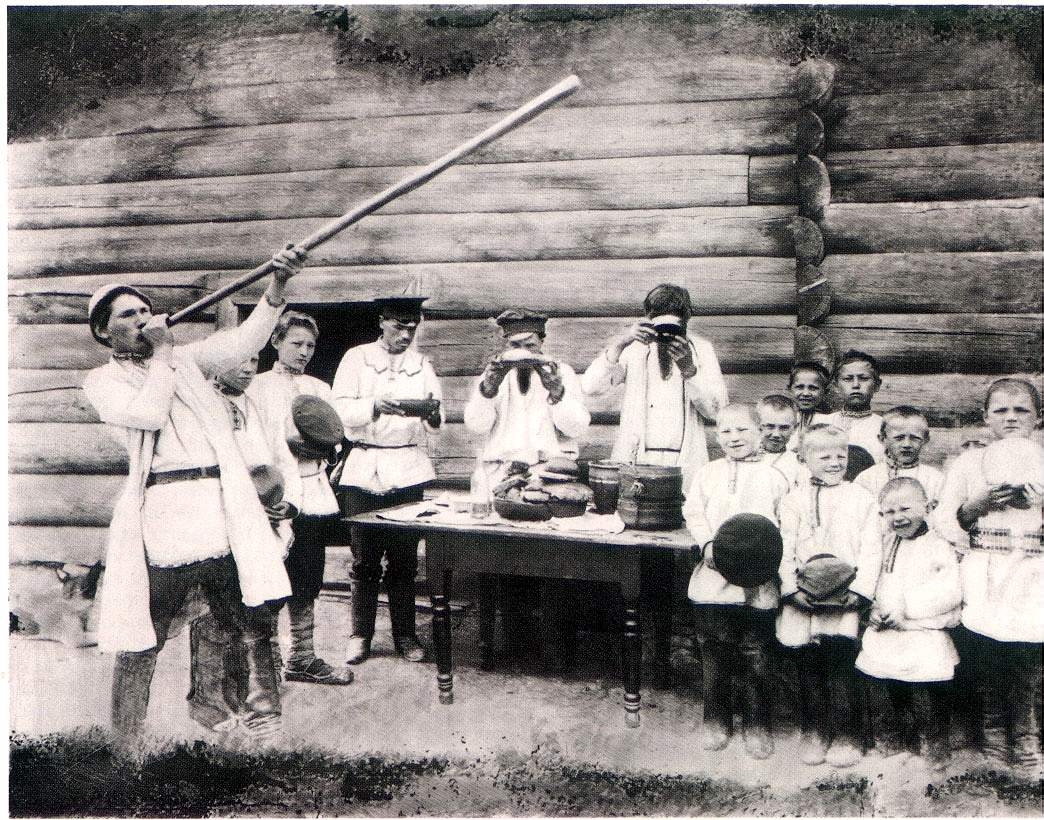
In connection with the "Year of Unity of the Peoples of Russia" project, we would like to introduce you to our Mari people.
The Mari people are a Finno-Ugric people with an ancient history and a unique culture. According to the 2010 census, about 550,000 Mari people live in Russia, and almost half of them are in the Republic of Mari El. The people are divided into three ethnic groups: mountain, meadow and eastern Mari — each has its own traditions, language and national costume.
The ancestors of the Mari people appeared in the Volga-Vyatka region as early as the beginning of the first millennium A.D. Their lands spread on both sides of the Volga and passed through different eras: from the Golden Horde to the Kazan Khanate, and in the XVI century became part of the Russian state.
Despite the influence of Orthodoxy, Islam, Russian culture, and writing, the Mari people retained their ancient faith. Paganism has not disappeared here, which is why the Mari people are often called the last pagans of Europe.
There are about 40 gods in the Mari pantheon. The supreme creator god is "Osh Poro Kugu Yumo" — the Big White God. There are also deities of the elements: water, forest, fire — special rituals are dedicated to each of them.
The Mari people do not have temples in the usual sense. Prayers and sacrifices are held in sacred groves — "kōsoto". The rituals are conducted by a priest — "kart" — an intermediary between people and the gods.
Mari culture is a living connection with nature, ancient beliefs and ancestors.